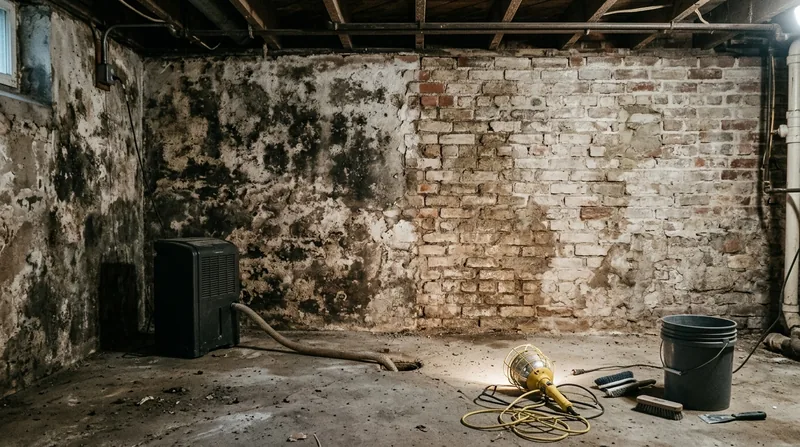




Wilmington sits where the Brandywine meets the Christina River, and that river-town setting drives most of the mold calls we get. The 1880s to 1930s rowhouses and foursquares in Trolley Square, Little Italy, and Price's Run have full basements under brick walls, often with fieldstone or early block foundations and old clay tile drains that no longer carry water away. The silty clay and weathered Piedmont rock hold spring rain and shed it slowly, and a high water table near the rivers pushes groundwater into lower walls. When that moisture sits on block, brick, and stored belongings, mold growth follows. Basement Mold Remediation in Wilmington means removing the growth and fixing the moisture source so it does not come back next season. We handle both halves of that job. Start with a free basement inspection so we can see where the water is actually entering.
Why Basement Mold Remediation Matters in Wilmington's Old Rowhouse Basements
Most of the mold we find in Wilmington is not a cleaning problem, it is a water problem. Brick and early block foundations wick groundwater, old clay tile drains crack and clog, and the freeze-thaw cycles that hit every winter open new cracks in masonry that let spring rain through. The humid summers keep basement air damp for months, which is exactly what mold needs to spread across joists, sill plates, and the back of stored furniture.
- Efflorescence and white salt staining on the lower wall tells you water is moving through the masonry, not just condensing on it.
- A musty basement smell that gets stronger after rain usually points to wall seepage feeding growth behind finishes or under stairs.
- Old clay weeping tile that has collapsed leaves the footing drain dead, so water rises into the slab and keeps the basement damp year round.
- Sump pump failure in a river-neighborhood basement can put inches of water on the floor in a single nor'easter, and mold starts on wet drywall and wood within days.
When we see these signs together, the honest answer is that remediation without a moisture fix is wasted money. The growth comes back the first wet week.
Key info: A homeowner in the 19805 ZIP near Little Italy called us after scrubbing the same wall three summers in a row. The growth kept returning because a failed footing drain was holding water against the wall. We treated the affected surfaces and tied the wall into a working interior perimeter drain, and the wall has stayed dry since.
Delaware's building rules and contractor licensing are handled at the state and local level, and the City of Wilmington's Department of Licenses and Inspections is the place to confirm what a given job requires. You can review the city's permit information at Wilmington Licenses and Inspections.
How We Run Basement Mold Remediation in Wilmington Homes
We work from the water source outward, not the other way around. The first visit is diagnostic: we trace where moisture is entering, check the sump basin and discharge line, look at grading and downspout extension outside, and test the musty smell to confirm what we are dealing with. Then we build a scope that treats the growth and corrects the moisture path, so the basement dries out and stays dry.
- We contain the work area with plastic sheeting and negative air pressure so spores do not spread into the rest of the house during removal.
- We remove and bag porous materials that cannot be cleaned, such as wet drywall, insulation, and saturated cardboard or wood.
- We treat affected framing, block, and masonry with an antimicrobial application and HEPA-vacuum the surfaces afterward.
- We correct the moisture source, which may mean sealing wall seepage, repairing the drain tile, installing a vapor barrier, or replacing a failed sump pump.
- We set up dehumidification and verify moisture readings before we call the job done.
The moisture correction step is what separates a real remediation from a cleanup, and it is where most of the value sits. If the diagnosis points to wall seepage rather than a drainage failure, basement wall sealing is often the right complement.
Key info: A 1950s split-level in Hockessin had growth across the lower block wall and a musty smell in the finished room. The cause was a downspout dumping roof water at the foundation corner and grading that sloped back toward the house. We corrected the grading and downspout extension, treated the wall, and the readings stayed dry through the next spring thaw.
Remediation Approaches We Use in Wilmington Basements
Not every basement needs the same scope. The table below shows the approaches we use most often in Wilmington and the situations each one fits. We pick the method after the inspection, not before.
| Approach | Description | Best for |
|---|---|---|
| Surface treatment and HEPA cleanup | Containment, antimicrobial application, vacuuming, and removal of affected porous materials. | Light growth on block, joists, and stored items after a one-time water event. |
| Treatment plus wall seepage correction | Remediation paired with sealing or parging the wall where water is wicking through masonry. | Efflorescence and recurring growth on lower walls in older rowhouses. |
| Treatment plus drainage correction | Remediation paired with interior perimeter drain, drain tile repair, or sump work to move water away. | Hydrostatic pressure, wet slabs, and failed footing drains near the rivers. |
| Treatment plus vapor and humidity control | Vapor barrier and dehumidification to keep basement air and surfaces dry. | Humid summer basements where condensation keeps feeding growth. |
Most Wilmington jobs combine two of these rows, and the inspection tells us which pair fits your basement.
Basement Mold Remediation Cost in Wilmington: What to Expect
Remediation in Wilmington starts from $1,500 for a contained treatment of a single affected area with the moisture source corrected. Real jobs move up from there based on square footage affected, how much porous material has to come out, and how much drainage or sealing work the moisture fix requires. A large finished basement with growth behind paneling and a failed drain tile will land well above the starting figure, while a small area with a simple grading fix stays near it.
- Size of the affected area drives material removal and treatment time more than any other single factor.
- Whether the moisture fix is a grading correction or a full interior drain tile system changes the scope substantially.
- Access matters in rowhouse basements where equipment has to come down narrow stairs or through tight doors.
- Urgency and after-hours work add cost when water is still active and the job cannot wait.
Getting two or three written estimates is smart, and we encourage it. Ask each contractor to separate the remediation from the moisture correction so you can compare like for like. Our full pricing overview lays out how the numbers break down.
Basement Mold Remediation Near Me: How to Vet a Contractor Near Wilmington
Mold work touches your home's structure and the air your family breathes, so hire carefully. Use these checks before you sign anything, whether the contractor is in Wilmington, Newark, or New Castle.
- Confirm the company is licensed and insured for the work, and ask for a certificate of insurance you can verify.
- Get at least two or three estimates in writing, with the remediation and the moisture fix priced separately.
- Ask for references from nearby jobs in similar housing stock, and call them.
- Ask who pulls any permit the job needs, and confirm the rules with the local building department since thresholds vary.
- Ask how the contractor will verify dryness at the end, not just how they will remove the growth.
If a contractor cannot explain the moisture source in plain terms, keep looking. A good specialist will tell you when simple sealing is enough and when the real problem is hydrostatic pressure that needs drainage. Reach us through our contact page to set up an inspection.
Basement Mold Remediation in Wilmington: Pricing Guide
| Service | Price | Details |
|---|---|---|
| Contained treatment of one affected area | Starting at $1,500 | Includes containment, antimicrobial treatment, HEPA cleanup, and basic moisture source correction. |
| Treatment plus wall seepage correction | Starting at $2,400 | Adds sealing or parging of wicking masonry, priced by wall length and access difficulty. |
| Treatment plus drainage correction | On estimate | Interior drain tile, drain tile repair, or sump work scoped after inspection of the water path. |
| Large finished basement scope | On estimate | Finished walls, paneling, and stored contents require an on-site look before any number. |
| Travel | Included | in Wilmington and surrounding areas, no separate call-out or mileage fee |
| Estimate | Free | Response within 24h at (302) 573-9185, no obligation to book |
Indicative pricing, the exact cost depends on square footage, finish, and site access. Free personalized estimate within 24h at (302) 573-9185.


