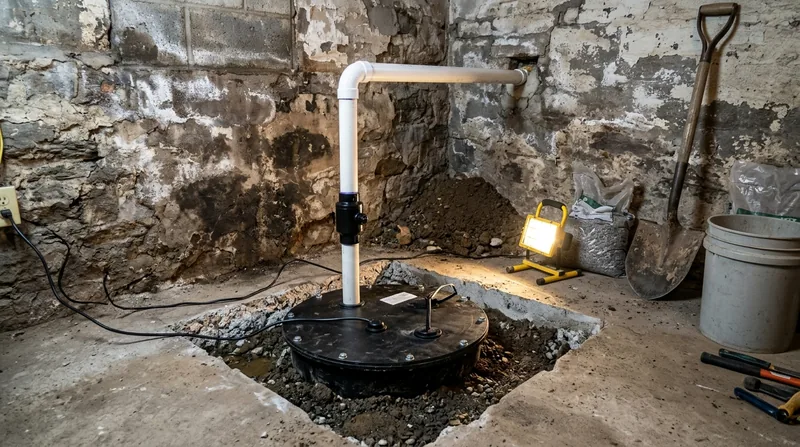




Sump Pump Installation & Replacement in Wilmington: Built for Brandywine Groundwater
Wilmington sits where the Brandywine meets the Christina River, and that geography drives most of the sump pump work we do. The 1880s to 1930s rowhouses in Trolley Square, Little Italy, and along Price's Run were built with fieldstone or early block foundations and old clay tile drains that clog and collapse. Underneath it all is weathered Piedmont rock and silty clay that holds spring rain and sheds it slowly, while a high water table near the rivers pushes groundwater into lower walls. When a nor'easter or a heavy summer downpour hits, that water finds the lowest point in the basement, which is why Sump Pump Installation & Replacement in Wilmington is the first line of defense for any finished or used basement. We install, replace, and correct discharge lines so the pump moves water out before it becomes a wet basement problem. If you are already seeing seepage at the wall base, start with a basement waterproofing assessment before the pump becomes the only thing standing between you and a flooded floor.
Why Sump Pump Failure Hits Wilmington Basements Harder Than Most
Older Wilmington neighborhoods were graded before modern storm drainage, and many rowhouse basements sit below the street-side sewer invert. In spring, the silty clay stays saturated for weeks, so a pump runs far more cycles than it would on sandy ground. Add freeze-thaw cycles that open cracks in old masonry and summer downpours that overwhelm window wells, and the pump becomes the hardest-working appliance in the house. When it quits during a storm, water backs into the basin and spreads across the slab within hours.
- Aging pumps burn out after years of short-cycling against a high water table near the Christina River.
- Undersized basins fill faster than a low-head pump can clear them during a nor'easter.
- Missing check valves let discharged water drain right back into the pit after each cycle.
- Discharge lines that freeze at the exterior wall stop the pump dead in January and February.
- Clay tile drains that collapse deliver silt to the basin and clog the pump intake.
Any one of these turns a manageable water table into a wet basement, and two together usually mean a flooded floor during the next big storm.
Key info: A homeowner in the 19805 ZIP code near Little Italy called us after a March nor'easter filled her basement with two inches of water. Her 15-year-old pump had a cracked impeller and no check valve, so every cycle sent water back into the basin. We replaced the pump, added a sealed basin lid and check valve, and rerouted the discharge to daylight above grade. The basement has stayed dry through two more heavy rain events.
For official guidance on plumbing and drainage permits in the city, check the City of Wilmington licensing and inspections pages before any work that alters a discharge connection.
How We Install or Replace a Sump Pump in Wilmington Homes
Every job starts with a free basement inspection to see how water actually enters. We check the existing basin, the drain tile entering it, the discharge route, and the grading outside the foundation. In older rowhouses we often find a shallow pit cut into the slab with no liner and a pump sitting in mud. In 1940s and 1960s ranches and split-levels, the basin is usually deeper but the discharge line runs underground and freezes. We size the pump to the actual inflow, not to a generic chart.
- We inspect the basin, drain tile, and discharge line, and measure how fast water recovers in the pit.
- We set a new sump basin with a sealed lid and a properly sized pump matched to the inflow rate.
- We install a check valve on the discharge and route the line to a freeze-protected daylight outlet or a code-compliant connection.
- We test the pump through several full cycles and confirm the float activates before the basin overflows.
- We walk you through the system and recommend a battery backup if the basement is finished or the pump is the only protection.
The result is a system that handles the spring water table and summer downpours without burning out mid-storm.
Key info: In a 1950s split-level off Kirkwood Highway near Newark, the homeowner had replaced the pump twice in four years. The real problem was a discharge line buried shallow that froze every winter and cracked, so the pump ran against a dead head and overheated. We rerouted the line to a graded daylight outlet and added a battery backup. That pump has now run three winters without a failure.
If the basin is filling with silt from failed drain tile, a pump replacement alone will not solve it. That is when we recommend drain tile repair and replacement so the pump gets clear water instead of mud.
Sump Pump Approaches We Use in Wilmington Basements
Not every basement needs the same setup. A rowhouse in Trolley Square with a shallow pit and a high water table needs a different pump and basin than a hillside walkout in Hockessin. The table below shows the main approaches we install and when each one makes sense.
| Approach | Description | Best for |
|---|---|---|
| Standard submersible pump replacement | Swap the pump and check valve in an existing basin that is sound and properly sized. | Working basin, failed pump, budget-focused replacement. |
| New basin and pump installation | Cut a new pit, set a lined basin with a sealed lid, and install a sized pump and discharge. | No existing sump, shallow mud pit, or undersized basin. |
| Pump plus battery backup | Primary pump with a DC backup pump and battery that runs during power outages. | Finished basements, high water table, storm-season reliability. |
| Discharge line correction | Reroute a frozen or short-cycling discharge to a graded, freeze-protected outlet. | Pumps that run constantly or fail every winter. |
| Pump and interior drain tie-in | Connect a new perimeter drain to the basin so wall seepage reaches the pump. | Hydrostatic pressure pushing water through wall joints. |
Each approach is matched to the water volume and the basement layout, so the pump runs the right number of cycles instead of constantly.
Sump Pump Installation & Replacement Cost in Wilmington: What to Expect
Most Wilmington homeowners ask about cost before anything else, and the honest answer is that a straight pump swap and a full basin rebuild are different jobs. A basic replacement in a sound existing basin starts around $1,200, which covers the pump, check valve, and discharge testing. New basin installation, sealed lids, and discharge rerouting move the number up because they involve cutting concrete and running new pipe. Finished basements and high-water-table properties near the rivers often justify a battery backup, which adds to the total but keeps the system running during outages.
Getting two or three estimates is smart because the scope varies so much. One contractor may quote a pump swap while another quotes a basin rebuild, and the lower number is not always the right fix. Ask each one to explain the inflow rate, the discharge route, and whether the existing drain tile is delivering clear water or silt. For a fuller breakdown of what each option includes, see our pricing overview.
What to Look for When Hiring a Sump Pump Contractor Near Wilmington
Hiring for sump pump work near Wilmington means checking a few basics before anyone touches your basement. Confirm the contractor is licensed and insured for the scope, ask for the certificate, and get the estimate in writing with the pump model and basin dimensions listed. Ask for references from jobs in older rowhouses or block-foundation homes similar to yours, because those basements behave differently from new construction. Finally, ask who pulls the permit if the discharge connection or drainage alteration requires one, since rules vary by jurisdiction and the local building department has the final say.
To set up a free basement inspection and a written estimate, reach out through our contact page or call (302) 573-9185. We serve Wilmington and the surrounding neighborhoods, and we will tell you plainly if a simple pump replacement is enough or if the real problem is hydrostatic pressure that needs an interior drain tile system.
Sump Pump Installation & Replacement in Wilmington: Pricing Guide
| Service | Price | Details |
|---|---|---|
| Pump replacement in existing basin | Starting at $1,200 | Includes new submersible pump, check valve, and discharge testing; basin condition moves the price. |
| New basin and pump installation | Starting at $2,400 | Cut and lined basin, sealed lid, sized pump; concrete cutting and pit depth affect the total. |
| Pump plus battery backup system | Starting at $1,900 | Primary pump with DC backup and battery; finished basements and high water tables justify it. |
| Discharge line correction | Starting at $650 | Reroute frozen or short-cycling discharge to a graded daylight outlet; run length drives cost. |
| Complex or large-scale job | On estimate | Multiple pits, drain tile tie-ins, or finished basement protection need an on-site look first. |
| Estimate | Free | Response within 24h at (302) 573-9185, no obligation to book the work. |
Indicative pricing, the exact cost depends on square footage, finish, and site access. Free personalized estimate within 24h at (302) 573-9185.


