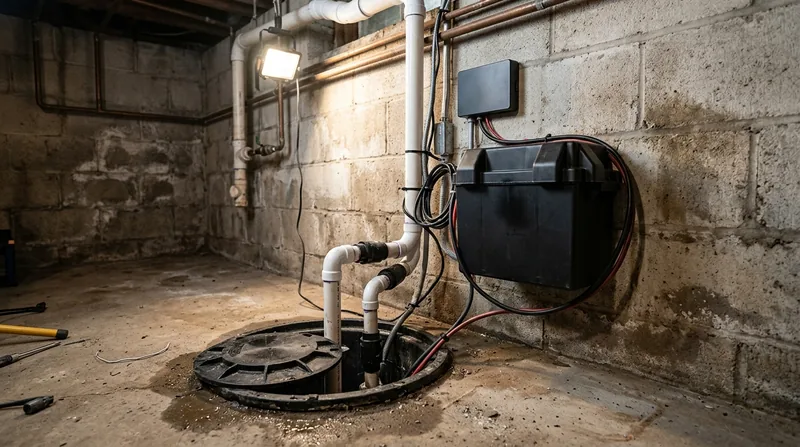




Battery Backup Sump Pumps in Wilmington: Power Loss Is the Failure You Cannot Plan For
Wilmington sits where the Brandywine meets the Christina River, and that geography sets up the exact problem a battery backup solves. The 1880s to 1930s rowhouses in Trolley Square, Little Italy, and Price's Run have full basements under brick walls, often on fieldstone or early block foundations with old clay tile drains that still feed a sump basin. When a nor'easter rolls through and the grid goes down, the primary pump stops at the moment the water table is climbing fastest. Installing Battery Backup Sump Pumps in Wilmington means your pit keeps discharging when the lights are out, the street is flooded, and the creek is surging.
We size the backup to your actual pit and pumping load, not to a generic box on a shelf. If you are still running a single pump with no secondary, start with our sump pump installation and replacement page and we will tell you plainly whether a backup alone is enough or whether the basin and discharge line need attention first.
Why Backup Pumping Matters in Wilmington's Old Basements and Silty Clay
Much of Wilmington's ground is weathered Piedmont rock and silty clay. That soil holds water in spring and sheds it slowly, so a storm does not drain away in an hour, it keeps feeding the footing drain for days. Add freeze-thaw cycles that open cracks in old masonry and a high water table near the rivers, and the pump runs long after the rain stops. A power outage during that window is when basements flood.
- Nor'easters and heavy summer downpours knock out power exactly when inflow peaks.
- Older clay tile drains in Trolley Square and Little Italy deliver a steady, gritty flow that can stall a primary pump.
- Hillside walkout lots in the north take on water from above as well as from the water table.
- Spring thaw and saturated silty clay keep the basin cycling for days after a storm passes.
A backup does not replace a failing primary pump, it covers the gap until power returns or you can get a replacement in.
Key info: In a Bellefonte basement we serviced after a February nor'easter, the primary pump was fine but the circuit was dead for eleven hours. The battery unit carried the pit through the entire surge and the floor stayed dry.
Delaware's Division of Professional Regulation maintains contractor licensing records you can check before any below-grade work begins: Delaware Division of Professional Regulation.
How We Set Up a Battery Backup in a Wilmington Basement
We start by looking at what you already have: basin size, pump horsepower, discharge line diameter, check valve condition, and how the float is set. A backup bolted onto a marginal pit just doubles the problem. From there we match battery capacity to the run time your basement actually needs, then test the whole arrangement under load before we leave.
- We inspect the sump basin, primary pump, check valve, and discharge line for restrictions.
- We measure pit depth and inflow rate to size the backup pump and battery correctly.
- We install the backup pump on its own float, independent of the primary switch.
- We mount the battery and charger in a dry, ventilated spot with a clear run to the pit.
- We wire an alarm so you hear a high-water or power-loss condition before the floor gets wet.
- We fill the pit and run both pumps to confirm the check valve seals and the discharge clears.
If the discharge line runs into the sanitary connection, we flag it for the local building department because rules vary by jurisdiction and must be verified before we alter it.
Key info: A 1940s ranch in Elsmere had a 24-inch basin with a short cycle and a 1-1/4 inch discharge. We upsized the backup battery to cover a 10-hour outage and added a high-water alarm, since the homeowner travels in spring.
If your pit is undersized or the drain tile is silted, the backup is only part of the fix. Our interior drain tile system page covers what a properly sized basin and perimeter drain look like.
Backup Configurations We Install and When Each One Fits
Not every basement needs the same rig. A rowhouse in Little Italy with a shallow pit and modest inflow is a different job from a hillside walkout in the north that takes on groundwater from two directions. The table below shows the main approaches we use and the situations they suit.
| Approach | Description | Best for |
|---|---|---|
| Battery backup pump in existing basin | Secondary pump and float mounted beside the primary, sharing the pit and discharge. | Basements with a sound primary pump and a correctly sized basin. |
| Backup plus high-water alarm | Battery unit with an audible alarm for power loss and high water level. | Homeowners who travel or who have finished basement space. |
| Backup with upsized battery bank | Larger capacity battery sized for extended outages and long pump cycles. | River-adjacent homes where the water table stays high for days. |
| Backup paired with basin and discharge upgrades | New basin, check valve, and discharge line installed with the backup unit. | Older pits with silt, short cycling, or a restricted discharge line. |
We will tell you when a simple battery unit is enough and when the pit itself is the weak link.
Battery Backup Sump Pumps Cost in Wilmington: What to Expect
Pricing starts at $900 for a standard battery backup installed in an existing, sound basin. That figure covers the backup pump, float, battery, charger, and the test run. It moves up when the basin is undersized, the discharge line needs replacement, or the battery bank has to be sized for long outages near the rivers.
- Basin condition and depth drive the labor more than the pump itself.
- Battery capacity is the main variable for homes that lose power for days.
- Discharge line routing and check valve replacement add scope when they are worn.
- Alarm and monitoring options add a modest amount to the total.
Get two or three written estimates and compare what is included, not just the bottom line. Our full pricing overview lays out how the numbers break down.
Choosing a Battery Backup Sump Pumps Contractor Near Me in Wilmington
Confirm the contractor actually specializes in below-grade work rather than general handyman service, and ask how they size battery capacity. Check references from basements similar to yours, and ask whether the discharge connection requires a permit from the local building department, since rules vary by jurisdiction and must be verified. If you are in a rowhouse or a neighborhood with association rules, confirm any exterior work requirements up front.
Reach out through our contact and free estimate page to set up a visit.
Battery Backup Sump Pumps in Wilmington: Pricing Guide
| Service | Price | Details |
|---|---|---|
| Standard battery backup installation | Starting at $900 | Includes backup pump, float, battery, charger, and full load test in an existing sound basin. |
| Backup with high-water alarm | Starting at $1,050 | Adds audible power-loss and high-water alarm, useful for finished basements and traveling homeowners. |
| Backup with upsized battery bank | Starting at $1,250 | Larger battery capacity sized for extended outages and long pump cycles near the rivers. |
| Backup plus basin and discharge upgrade | On estimate | New basin, check valve, and discharge line needed when the existing pit is silted or undersized. |
| Travel | Included | In Wilmington and surrounding areas, no separate call-out or mileage fee. |
| Estimate | Free | Response within 24h at (302) 573-9185, no obligation to book. |
Indicative pricing, the exact cost depends on square footage, finish, and site access. Free personalized estimate within 24h at (302) 573-9185.


