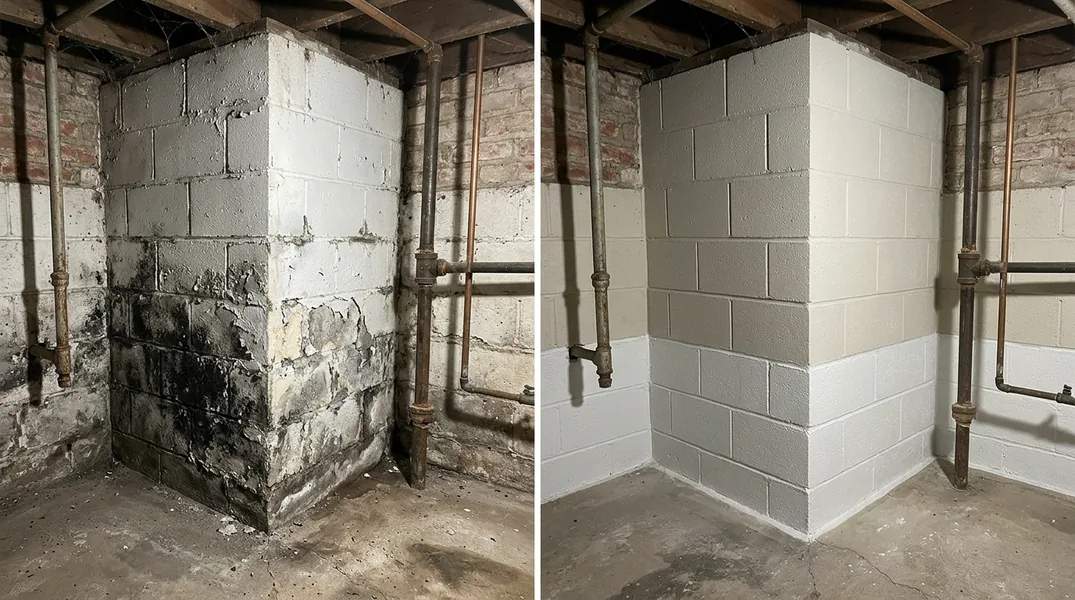
Interior vs. Exterior Waterproofing: The Core Difference
If you have water in your basement, you are probably facing the same question every homeowner eventually asks: should the fix happen inside the basement or outside against the foundation? The answer depends on where the water is coming from, how your home was built, and what you want the repair to accomplish long term. Understanding the difference between these two approaches is the first step toward choosing the right solution for your property in Wilmington.
Interior systems manage water after it has entered the basement wall or floor. The most common example is an Interior Drain Tile System, which collects water along the footing and directs it to a sump pump. Exterior systems stop water before it reaches the wall. This typically involves excavating around the foundation and applying a waterproof membrane and drainage layer. Neither approach is universally better. The right choice comes down to your specific leak pattern, soil conditions, and budget. A professional assessment is the only reliable way to know which path fits your home.
How Interior Drain Tile Systems Work (and When They Win)
An interior drain tile system is installed along the inside perimeter of your basement footing. Weep holes are drilled into the base of the block wall so water trapped inside the wall can escape, and a perforated pipe carries that water to a sump basin. From there, a pump lifts the water out and away from the house. This approach is popular because it requires no digging outside, it can be completed in a few days, and it works regardless of weather. It is also the go-to solution when the leak source is hydrostatic pressure pushing water up through the floor slab, a problem that exterior membranes alone cannot fix.
Interior systems also protect finished basements with minimal disruption. If you have drywall, flooring, or a home office downstairs, an interior drain tile installation keeps the work contained and avoids tearing up landscaping, driveways, or patios. For many homes in older neighborhoods around Elsmere and New Castle, where mature trees and tight lot lines make excavation difficult, interior drainage is often the most practical route to a dry basement.
Exterior Basement Waterproofing: Stopping Water at the Source
Exterior Basement Waterproofing takes the opposite approach. The soil around the foundation is excavated down to the footing, the wall is cleaned and repaired, and a waterproof membrane is applied. A drainage board and gravel are added to channel water away, and the footing drain is replaced or improved. This method addresses the root cause by keeping water out of the wall in the first place. It is especially effective for block foundations with visible cracks, bowing, or efflorescence, and for homes where the grade slopes toward the house.
Exterior work is more invasive and typically more expensive because it involves excavation, but it can be the better long-term investment when the foundation itself needs repair. If your walls are showing structural movement or you are planning a major landscape renovation anyway, exterior waterproofing lets you solve two problems at once. The tradeoff is access: fences, decks, and mature plantings can complicate the job, and the work is weather dependent. A reputable contractor will tell you honestly when exterior work is worth the added cost and when it is not.
Drain Tile vs. Exterior Membrane: A Side-by-Side Comparison
When homeowners compare drain tile vs exterior membrane options, the conversation usually comes down to three factors: effectiveness, disruption, and longevity. Interior drain tile is highly effective at managing water that has already entered the basement, and it continues to work even during heavy storms when the water table rises. Exterior membranes are excellent at preventing water from entering the wall in the first place, but they do not address water that comes up through the floor. In many cases, the ideal solution combines both: exterior waterproofing to protect the wall and interior drainage to handle any water that still finds its way in.
Disruption matters too. Interior work stays inside and usually takes less time. Exterior work requires digging and can temporarily affect your yard, driveway, or deck. Longevity is comparable when both are installed correctly, but exterior membranes can be damaged by root intrusion or poor backfill, while interior systems depend on a functioning sump pump and power supply. A thorough inspection of your foundation, grading, and drainage patterns is the only way to know which combination makes sense for your home.
Basement Waterproofing Cost in Wilmington: What to Budget
Cost is the question every homeowner asks first, and the honest answer is that it varies widely based on the size of your basement, the severity of the leak, and the method chosen. Interior drain tile systems are generally less expensive upfront because they require less excavation and labor. Exterior waterproofing costs more because of the digging, membrane materials, and restoration work, but it can add value by protecting the foundation itself. A small, localized repair might be a few thousand dollars, while a full-perimeter system can run considerably higher. You can review general ranges on our pricing page, but a site visit is the only way to get an accurate number.
Be cautious of any contractor who quotes a price over the phone without seeing your basement. The right fix depends on things you cannot describe accurately: the type of foundation, the slope of your yard, the condition of your gutters and downspouts, and whether water is entering through the wall, the floor joint, or the cove. A proper inspection takes less than an hour and prevents you from paying for a solution that does not match your problem. Ask for a written scope of work that explains what will be installed, how long it will take, and what warranty covers it.
Basement Waterproofing Near Me: When to Call a Professional
Some homeowners try to solve basement leaks with paint-on sealers or DIY crack filler, and while those products can help with minor surface moisture, they rarely fix the underlying problem. If you see water pooling on the floor, white powder on the walls, musty odors, or peeling paint, the issue is likely more than skin deep. A professional can identify whether the water is coming from the wall, the floor, or the footing, and recommend the right system rather than the most expensive one. For residents in Newark and across the region, a local contractor who understands Delaware soil and weather patterns is a real advantage.
If you are ready to stop guessing, contact Wilmington Waterproofing for a free estimate. We will inspect your basement, explain your options in plain language, and give you a clear written proposal with no pressure. You can also call us directly at (302) 573-9185 to schedule a visit. Whether your home needs an interior drain tile system, exterior waterproofing, or a targeted repair, the goal is the same: a dry, usable basement and a foundation that stays protected for years to come.
Looking for a professional basement waterproofing contractor in Wilmington? Wilmington Waterproofing responds fast for all your basement waterproofing needs.
Get a Free QuoteOur services: Basement Waterproofing · Interior Drain Tile System · Exterior Basement Waterproofing